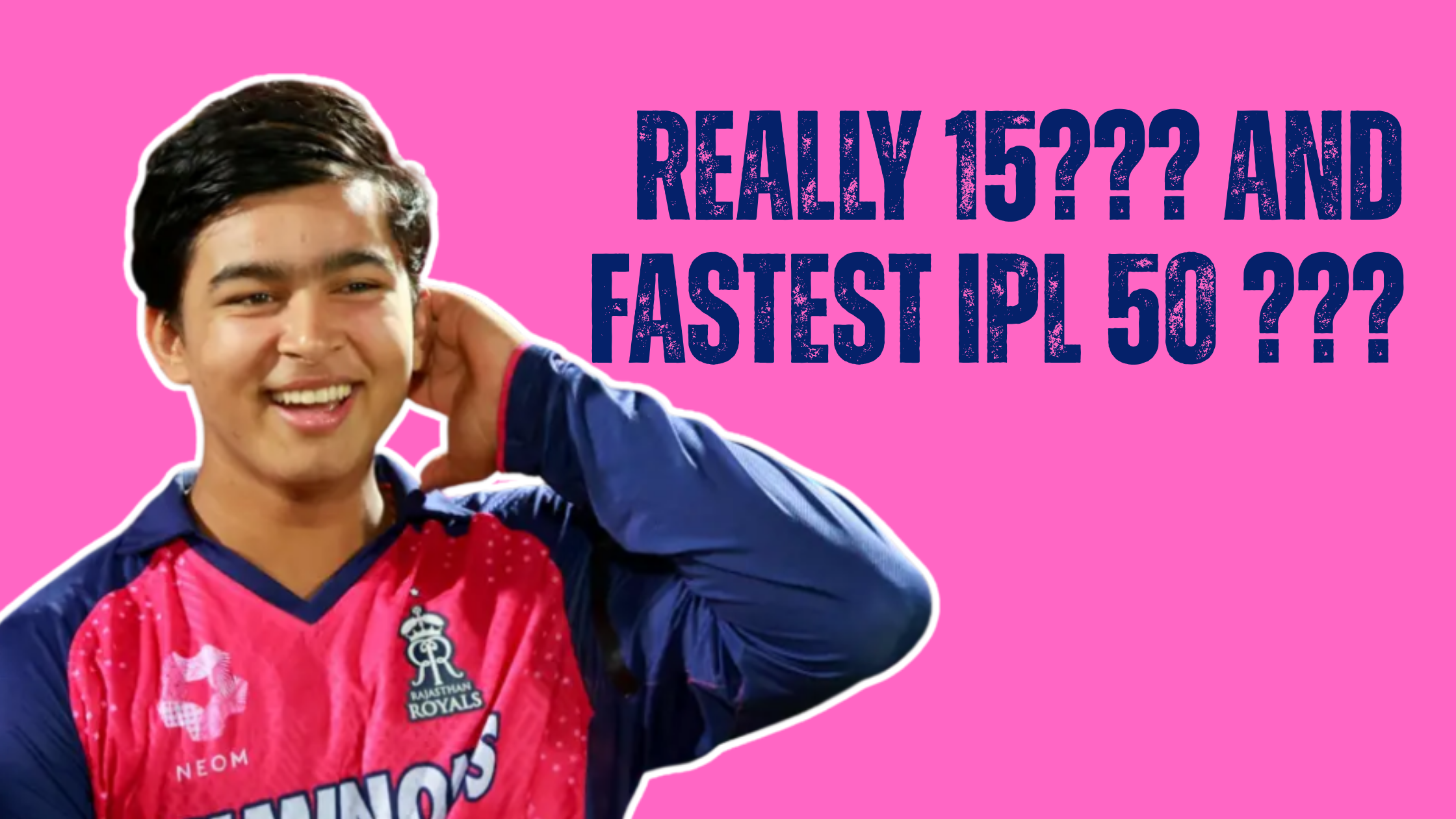
Okay, settle in cricket lovers, because IPL 2026 just delivered its most talked-about moment — and somehow it has nothing to do with the actual cricket.
Vaibhav Suryavanshi walked out for Rajasthan Royals against Chennai Super Kings and proceeded to absolutely demolish them. 52 runs. 17 balls.One of the fastest fifties in IPL history. Against seasoned international bowlers. From a kid who is — officially, legally, on-the-record — fifteen years old. And yet, the moment the highlights hit Twitter, we weren't talking about the sixes. We were talking about bone density tests.
"Official records list his birth year as 2011. The interview suggests a possible two-year age difference. Old photos from 2017 resurfaced, fueling more speculation."
Stackumbrella.com, summarising the internet's conspiracy board
A viral. Interview. Clip. That's what started all of this. A 2023 clip where Suryavanshi supposedly said he'd turn 14 that year — which, if true, would put a two-year gap between his "real" age and his official one. Add some old photos, stir vigorously, and congratulations: you have a full-blown age fraud conspiracy complete with screenshots, Reddit threads, and people who've clearly never heard of the TW3 bone age test.
So What Does The BCCI Actually Say?
Here's the part that tends to get drowned out by the noise: Suryavanshi has been cleared by the BCCI. Multiple times. The board uses the TW3 bone age test — a globally accepted method to estimate skeletal maturity. It's the same standard applied to age-group cricket across the world. Not a rubber stamp. Not a favour. A medical test.
No formal complaint has stuck. No investigation has found wrongdoing. He has been passed eligible at every official level he has played. According to cricket's governing system, he is 15. Full stop. And yet here we are, debating it again — because he dared to bat too well.
WAIT TILL YOU HEAR : The Real Issue Here
Because this isn't actually about age verification anymore, is it? It's about the deeply uncomfortable feeling we get when someone plays cricket that looks nothing like what a 15-year-old is supposed to look like. He hits sixes that senior internationals think twice about. He doesn't flinch against pace. He doesn't look rattled on the big stage.
But hold up — Sachin Tendulkar was doing exactly this at 16 in Test cricket. Nobody was demanding bone density reports. The difference? Social media scrutiny is harsher than it has ever been. Every extraordinary performance is now treated as evidence of something suspicious. Which says more about us than it does about him.
What Happens Next?
Suryavanshi isn't slowing down. He already has a U-19 World Cup on his CV. He's now tearing apart IPL 2026. Calls for a senior India debut are growing louder by the match. The trajectory is extraordinary.
The bigger conversation this controversy is actually forcing — one that's long overdue — is about transparency in age verification. Fans feel locked out of BCCI processes they don't understand, and that gap is where misinformation breeds. Cricket authorities need to communicate better, not just certify players quietly and hope the internet moves on.
The age fraud discourse will trend for a few more days, maybe weeks — and then fade until his next big knock. But here's the burning question nobody can quite answer: if the BCCI's own medical tests keep clearing him, and no formal investigation has found a thing, who exactly is supposed to be running this cover-up? Think about that one.